ASW (Anti Submarine Warfare)
ASW (Anti Submarine Warfare) is the discipline where a surface ship wants to find enemy submarines at as great a distance as possible, and preferably before the submarine can fire torpedoes at your own ships. If the submarine's torpedo has an effective range of e.g. 20 nautical miles, then you must be able to detect the submarine at a greater distance. This can only be done using Active Towed Array Sonar.
An effective active sonar is lowered into the water, where it emits very powerful sound pulses dispersed in the water. If the sound wave meets a submarine, some of these waves are reflected back — exactly the same way a bat catches its prey.
To receive the weak sound waves reflected from the submarine, a long series of hydrophones are lowered into the water, preferably 400 to 1,000 metres behind the ship, to reduce the propeller noise that the ship itself generates. A TAS (Towed Array Sonar) typically consists of 60 to 120 hydrophones hanging like beads on a string. By calculating all the signals from all hydrophones, it is easier to distinguish between the reflected signal from the submarine and the background noise (it's again the same way the bat does — it only has two ears).
Of course, submarine designers try to make the submarine as invisible as possible. The entire submarine is therefore typically coated with a thick layer of polyurethane, to absorb the sonar sound instead of reflecting it. How good the submarine is at absorbing the sound is called TS (Target Strength). The lower the TS, the better the submarine is at sneaking past — in the same way as a "stealth plane" is very difficult to detect with radar.
In the F341 Model
The model F341 has a hull-mounted sonar and a TAS (Towed Array Sonar) system.
Hull-Mounted Sonar Design
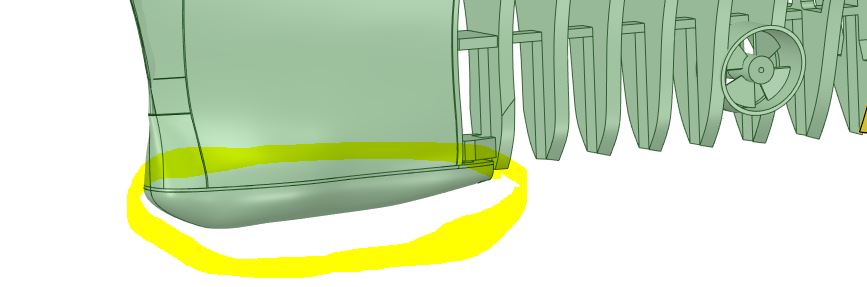
The sonar is a 344 kHz piezoelectric (PZT) disc element with a diameter of 27 mm (equal to 2 m at 1:1).
|
The hull-mounted sonar is placed below the keel, for optimal visibility in all directions. |
|
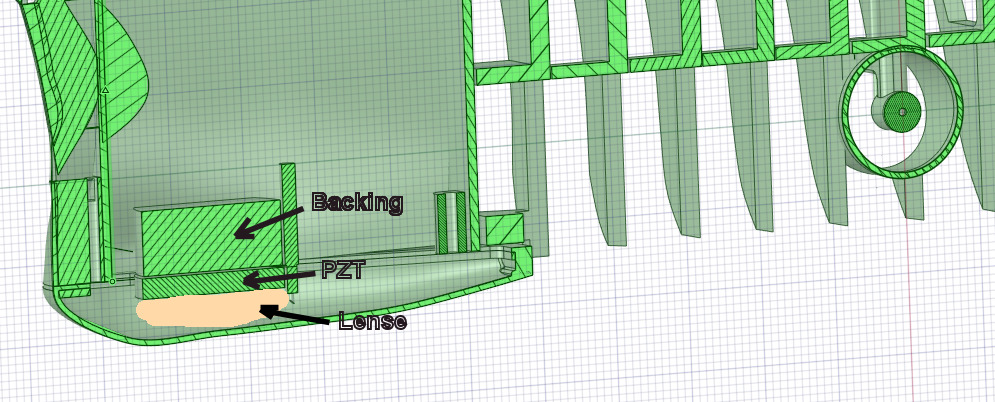
The sonar is designed with an acoustic front "lens" and a backing material made of a combination of tungsten powder and epoxy. The backing layer closest to the PZT is heavy density, to match the PZT acoustic impedance, and by gradually reducing the amount of tungsten powder, changing the density. The result is a well-damped transducer with a good transient response. The sonar can be powered by a 50 W amplifier and controlled by the 1 GHz Raspberry Pi — the main processor. |
TAS Towed Array Sonar & ATAS Design
The TAS is designed to reach a depth of a ship length (200 cm) at a speed of 2 knots.
Real-life TAS: A hydrophone array is made up of a large number of hydrophones placed in known locations and towed in a horizontal line behind a ship. Sound arriving from a distant source, such as a submarine, will reach each hydrophone at slightly different times depending on the direction from which the sound is coming. Using this information, the direction can be pinpointed. If background noise is uncorrelated, noise can be reduced by the square root of the number of hydrophones. An array with 100 hydrophones can therefore find noise sources that are (√100) 10 times below the individual hydrophone noise floor.
The ACTAS 'wet end' combines a high source level active transmitter (operating at a frequency range of 1.4–2.4 kHz) with a passive line array (covering frequencies between 50 Hz and 10 kHz). A triplet array (employing three hydrophones on a circular section of the array) is used to instantaneously resolve left/right bearing ambiguity.
Atlas Elektronik has previously supplied the ASO 94 medium-frequency hull-mounted sonars fitted to the two Absalon-class ships and the three Iver Huitfeldt-class frigates. DALO said that as well as meeting all operational requirements, the fact that Atlas Elektronik was already a supplier of other sonar equipment systems on Danish frigates would allow "a streamlining of ongoing operation and maintenance processes on the ships". The acquisition of Low Frequency Active TAS systems for the Absalon-class frigates forms part of a wider effort to rebuild the Royal Danish Navy's ASW capabilities. The other major part of this package is equipping Royal Danish Air Force-operated MH-60R helicopters with a sonics suite (dipping sonar and sonobuoy processing) and lightweight torpedoes.
In the model, TAS is implemented with a sinking class 10 fly-line. A "sink tip" line places itself flat in the water at a nice depth a few metres behind the ship. It is also rigid enough to be wound in and out completely automatically.
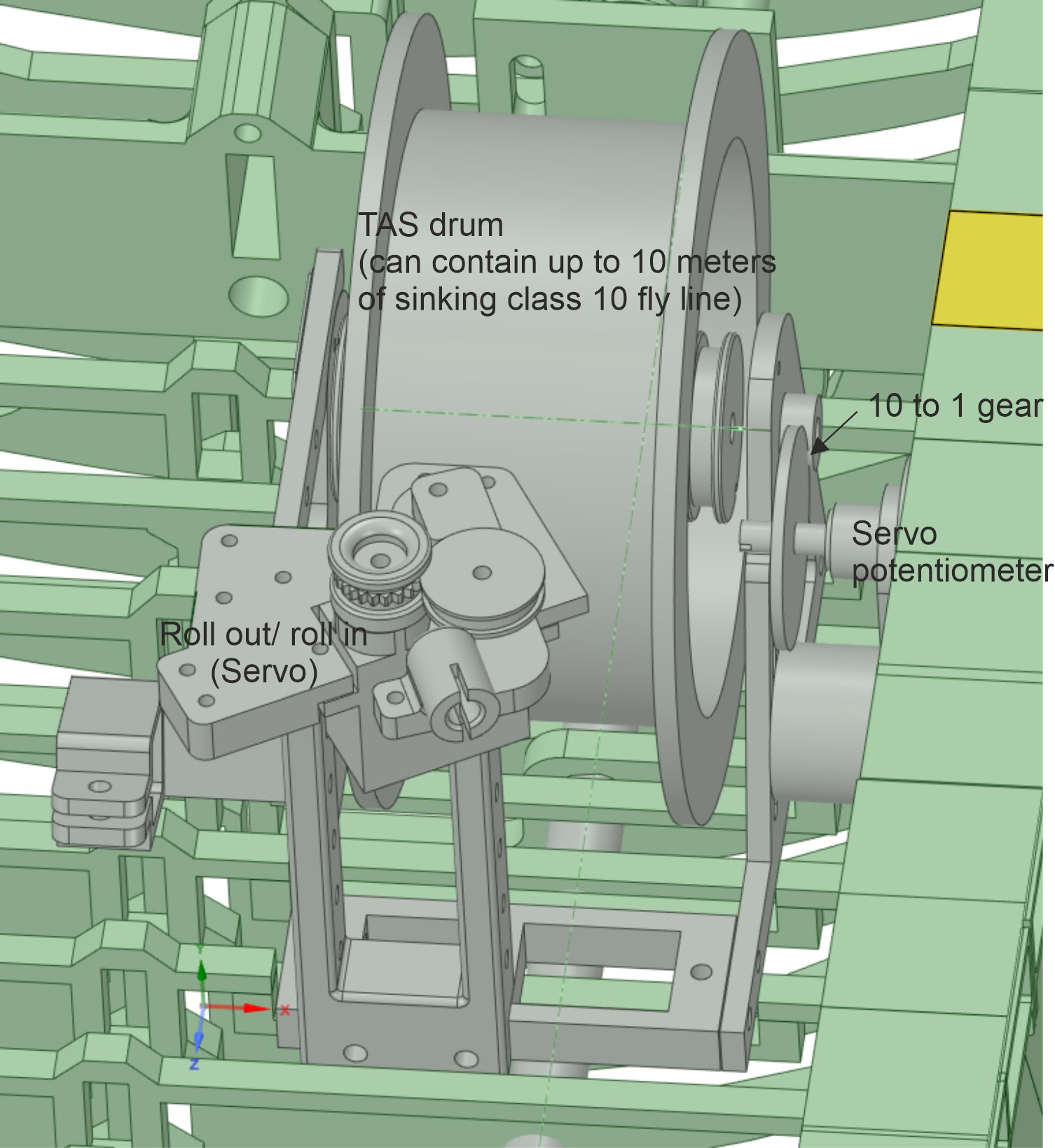
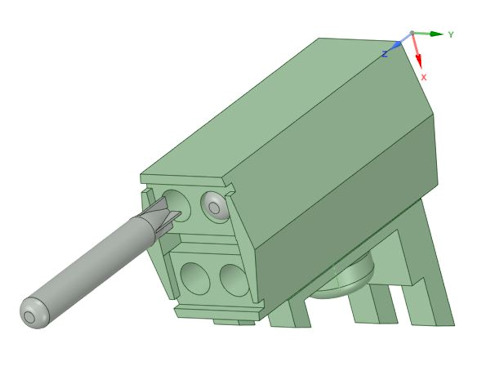
TAS winch — 3D drawings
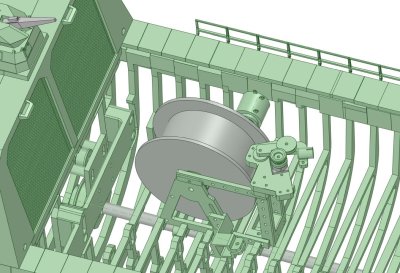
TAS system (click for video)
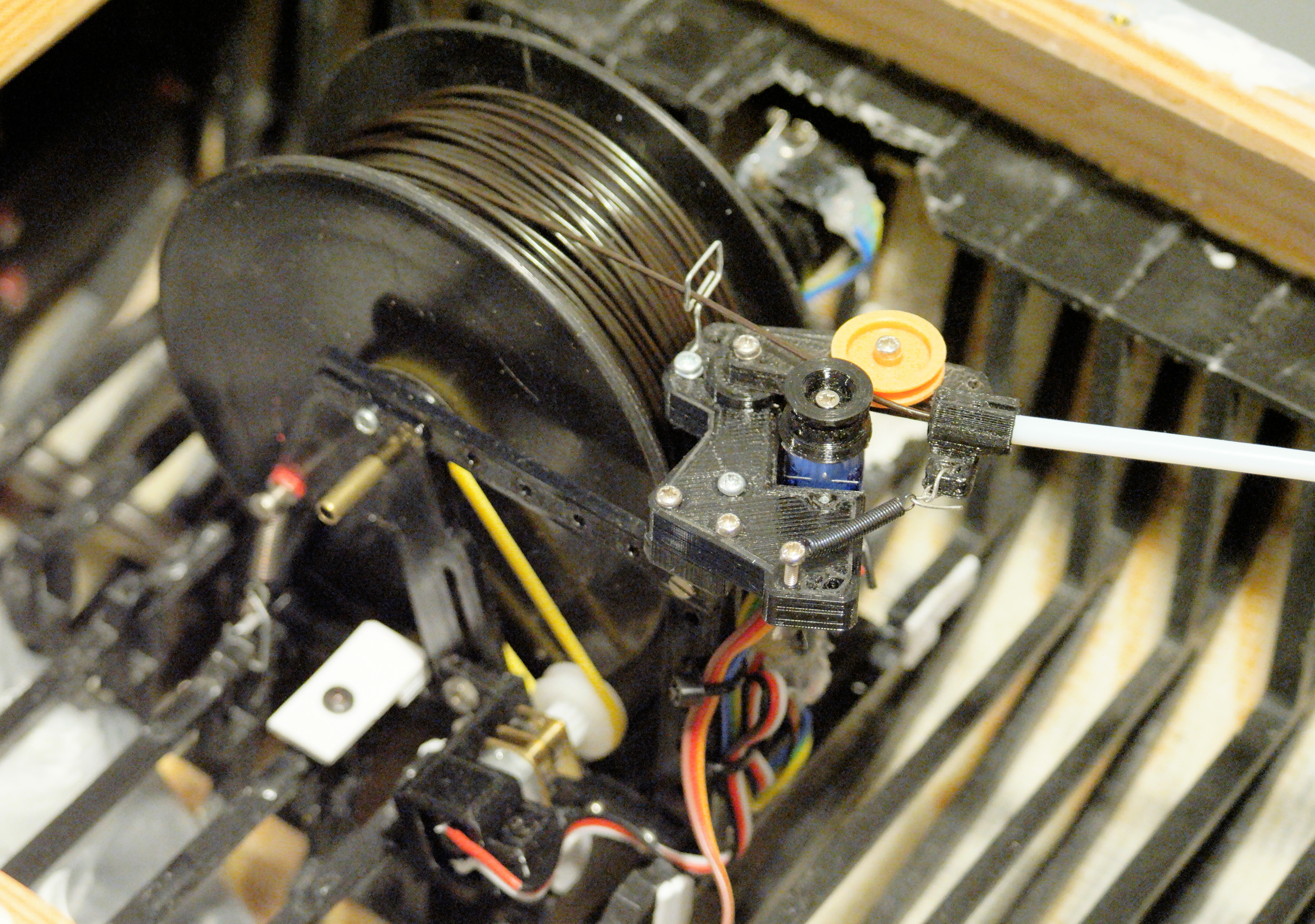
TAS installed in the ship
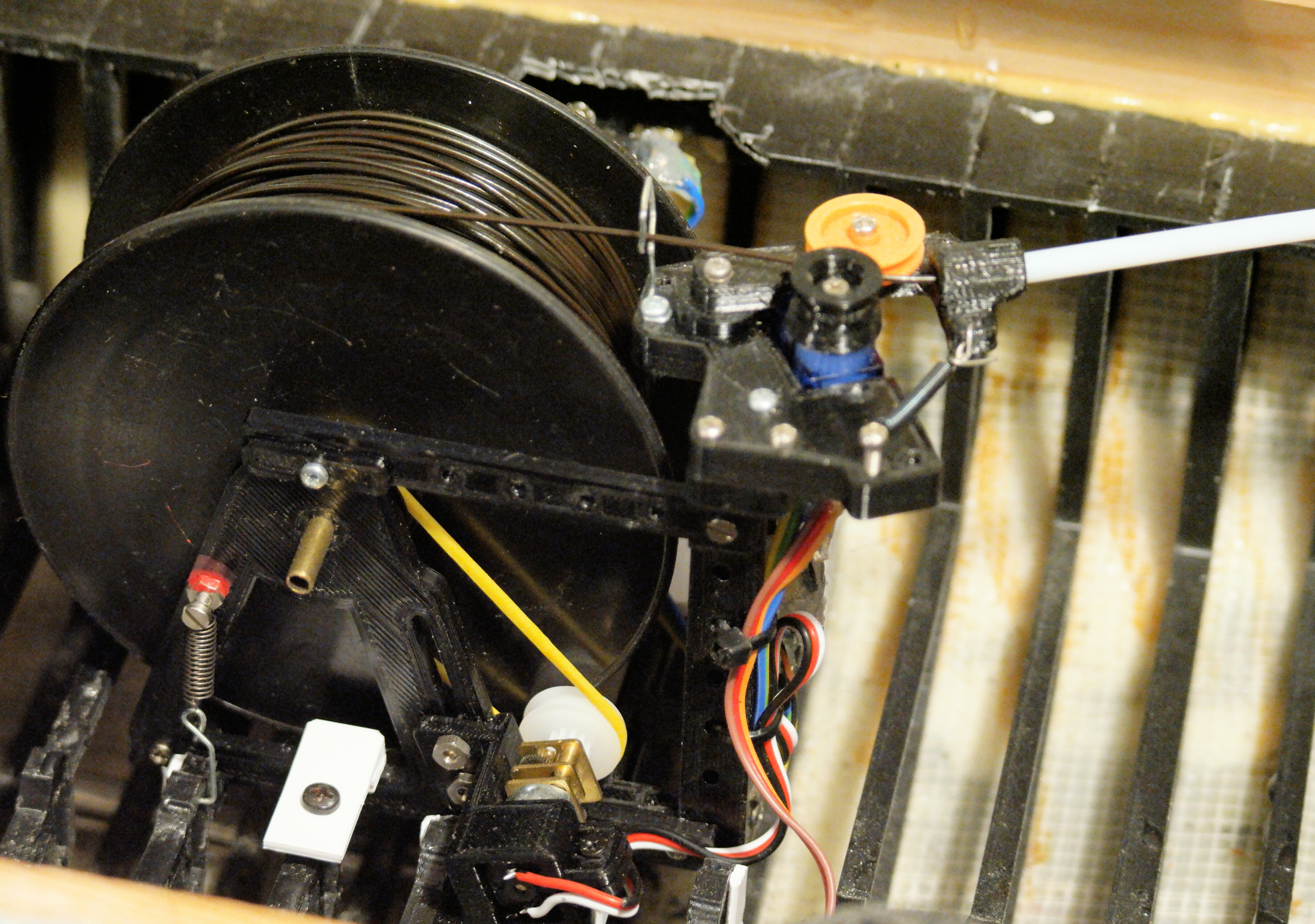
The TAS winch is designed with a modified servo and a multi-turn potentiometer. A 2nd motor ensures the array is rolled back onto the coil during retrieval. At the bottom you can see the shock absorber and the motor which pulls the TAS in.
ATAS — Active Towed Sonar Transmitter
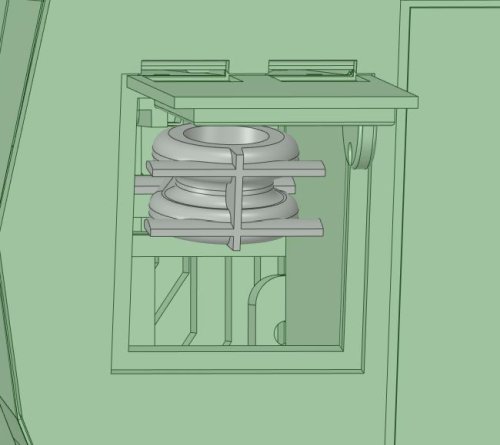
Active towed transmitter (click for video)
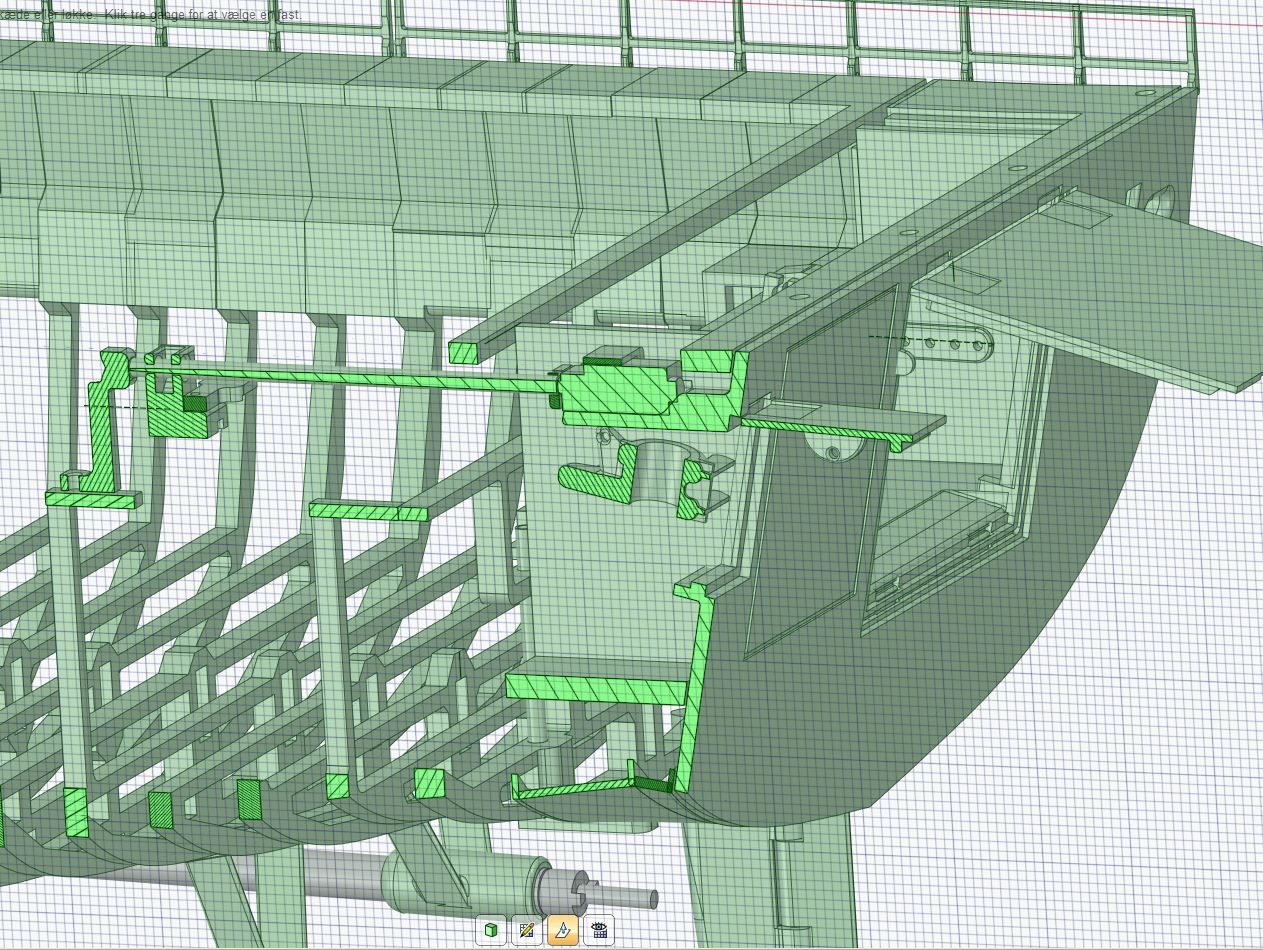
The ATAS is designed with a 100 mm linear servo motor that can open the rear gate and move the ATAS out into position. ATAS itself is designed as a two-ring transmitter with a resonant tube in the middle.
The transmitter can be designed in many ways, but it is important to send as much sound out into the horizontal plane as possible. Sound sent towards the surface or bottom must be reduced.
TAS in Action & Torpedo Defence
The model is prepared for torpedo defence with a "hard kill" ATT system.